Gmail: A Complete Guide to Gmail Accounts, Business Email, Security, and More
Gmail: A Complete Guide to Gmail Accounts, Business Email, Security, and More
Gmail is one of the most widely used email services, providing a simple way to send messages, manage contacts, organize conversations, and access email from almost any device. Also known as Google Mail in some regions, Gmail is used for personal communication, professional work, business email, online services, and many other everyday activities. Whether you want to create a new Gmail account, understand Gmail login, use Gmail for business, or learn about Google Workspace, understanding how the platform works can help you choose the right setup for your needs.
What Is Gmail and How Does It Work?
Gmail is Google’s email service that allows users to send, receive, organize, and manage electronic messages through a web browser or mobile application. A Gmail account also provides access to other Google services, making it more than simply an email inbox.
When you create a Gmail account, you receive an email address that generally ends in @gmail.com. You can use this address for personal communication, registrations, professional correspondence, online services, and everyday email.
The Gmail interface includes an inbox, sent messages, drafts, spam protection, trash, contacts, search, filters, labels, and other tools for managing email efficiently. Gmail also provides powerful search functionality, making it easier to locate older messages and attachments.
Because Gmail can be accessed through a browser and dedicated mobile apps, users can manage their email from computers, smartphones, and tablets without being restricted to one device.
What Is a Gmail Account?
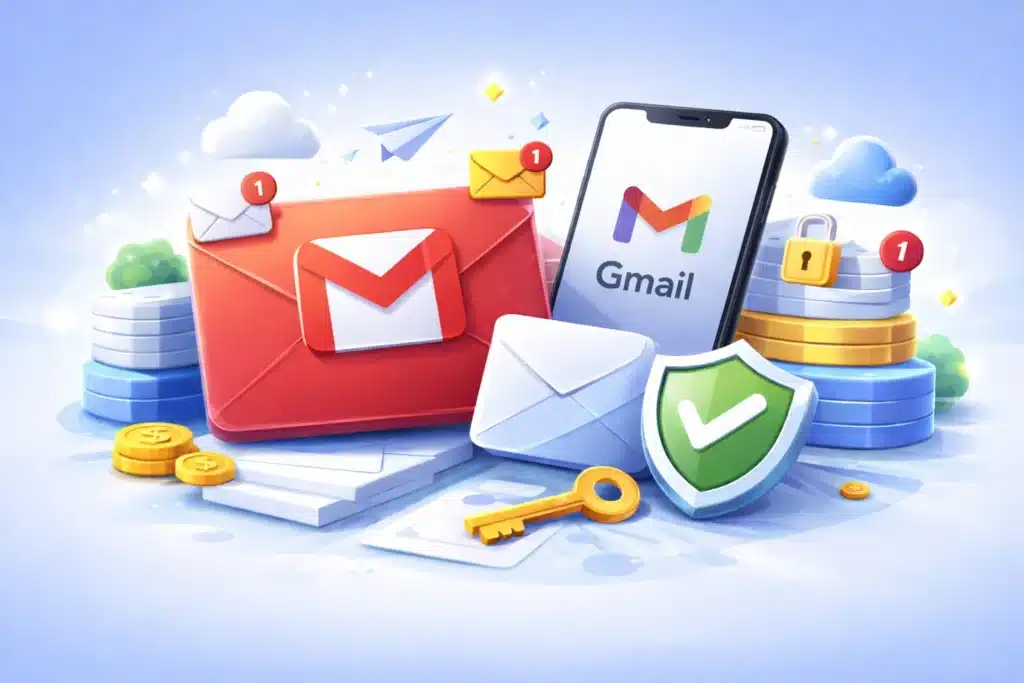
A Gmail account is an email account provided through Google’s Gmail service. It gives you a unique email address and access to a Gmail mailbox where incoming and outgoing messages are managed.
A typical Gmail account includes an inbox for received messages, a sent folder for outgoing email, drafts for unfinished messages, and additional organizational tools. Gmail also provides search and filtering features that can make managing a busy mailbox easier.
For many users, a Gmail account is also connected to a broader Google Account. This means the same credentials can provide access to services such as Google Drive, Google Docs, Google Calendar, Google Photos, and other Google products.
A Gmail free email account is suitable for many personal users who need a reliable address for communication, registrations, subscriptions, and everyday correspondence.
How to Create a New Gmail Account
Creating a new Gmail account is generally straightforward. Google provides an account creation process where users enter basic information, choose an available email address, create a password, and complete any verification steps requested during registration.
When selecting a new Gmail address, it is useful to choose something easy to remember and appropriate for its intended purpose. A personal address may use your name, while a professional address can be based on your name or business identity.
After creating the account, you should configure recovery information and security settings. A recovery email address or phone number can be useful if you later lose access to the account.
Before creating a new Gmail account, it is useful to review the official account requirements and registration process. Google provides detailed guidance on creating and managing accounts, including the information you may need during registration and the security steps that can help protect your account.
Setting Up a New Gmail Account
Once your account has been created, spend some time reviewing the Gmail settings. You can configure your inbox, notifications, signature, filters, forwarding options, and other preferences.
A strong, unique password is also important. For accounts containing important personal or business information, additional security measures such as two-step verification can provide another layer of protection.
Gmail Login: How to Sign In
The Gmail login process allows users to access their mailbox through Google’s website or the Gmail mobile application. You normally provide your Gmail email address and password before accessing your inbox.
If you use Gmail regularly, you can remain signed in on a trusted personal device. However, shared or public computers should be handled more carefully, and you should sign out when you finish using your account.
If you experience problems during Gmail login, check that your email address and password are entered correctly. Account recovery options may help when you have forgotten your password or cannot access your normal sign-in method.
Gmail for Business: Is It Suitable for Companies?
Gmail is also widely used for professional communication. A business Gmail account can provide a familiar email environment while giving companies a convenient way to communicate with customers, employees, suppliers, and business partners.
A small business may use Gmail for customer communication, appointment management, support requests, invoices, and general correspondence. For independent professionals and small teams, a professional email workflow can also make communication easier to organize.
The term Google business email can refer to professional email services offered through Google’s ecosystem. Businesses should distinguish between a standard free Gmail address and a managed business email setup using Google Workspace.
Personal Gmail vs Business Email
A personal Gmail account is designed primarily for individual use. Business email generally involves additional administrative, domain, security, and management requirements.
For example, a company may prefer an address using its own domain rather than a standard @gmail.com address. This can provide a more consistent identity across employees and departments.
The right choice depends on the size of the organization, the required features, domain requirements, administrative controls, and security needs.
Google Workspace and Business Gmail
Google Workspace email is Google’s business-oriented productivity and collaboration environment. It combines email with other tools that organizations can use for documents, calendars, storage, meetings, and team collaboration.
A business using Google Workspace can generally connect email to its own domain. This allows employees to use professional addresses associated with the company rather than relying exclusively on @gmail.com.
Google Workspace can be useful for organizations that need centralized administration, multiple user accounts, shared resources, security controls, and business productivity tools.
Google Workspace Email Hosting
Google Workspace provides business email functionality alongside other productivity services. Organizations can configure domain-based email and manage users through administrative tools.
This makes Google Workspace email hosting different from simply creating a free Gmail account. Businesses should evaluate their number of users, required storage, security requirements, administration needs, and budget before choosing a business email solution.
Gmail With a Custom Domain
A Gmail custom domain setup allows a business or organization to use Google-powered email while sending and receiving messages through an address associated with its own domain.
For example, instead of using a generic Gmail address, a business could use an address such as name@company.com.
Custom-domain email can be useful for companies that want consistent branding across their website, email addresses, and other communication channels.
Google Workspace is commonly associated with this type of business email configuration. Domain ownership and DNS settings are important parts of the setup.
Gmail as an Email Service Provider
Gmail is one of many available email service providers. Other providers offer different combinations of storage, security, collaboration tools, privacy features, administration, and pricing.
When comparing email services, users should consider more than just the mailbox interface. Important factors include account recovery, spam protection, security controls, mobile access, storage, search functionality, integrations, and support.
For businesses, additional considerations include custom domains, user administration, employee accounts, compliance requirements, and collaboration tools.
Business Email Hosting
Business email hosting provides organizations with email services associated with their business domain. Gmail and Google Workspace are one option within the broader business email ecosystem.
The best setup depends on how a company operates. A small business with a few users may have different requirements from a larger organization with multiple departments and administrators.
Gmail App and Official Gmail Website
Gmail can be accessed through its web interface as well as mobile applications. The web version is convenient when working from a desktop or laptop, while the Gmail app provides access to email from smartphones and tablets.
The Google Mail app and Gmail mobile experience provide tools for reading, sending, searching, and organizing messages while away from a computer.
Using the official Gmail website or official mobile application is preferable to entering login information into unfamiliar websites or unofficial applications.
Gmail Features You Should Know
One reason Gmail is widely used is the range of tools available for managing email.
Gmail Inbox and Mailbox
The Gmail mailbox organizes incoming communication and provides tools for sorting and searching messages. Users can mark messages as read or unread, archive conversations, delete unwanted messages, and organize important email.
Gmail Search
Gmail search allows users to locate messages based on different criteria. Searching is particularly useful when an inbox contains years of communication.
Gmail Labels
Labels can help organize messages according to projects, customers, departments, or other categories. Multiple labels can be used to create a more structured mailbox.
Gmail Filters
Filters can automate certain email-management tasks. Depending on the selected conditions, filters can help organize incoming messages or apply specific actions automatically.
Gmail Forwarding
Email forwarding allows messages received in one mailbox to be forwarded to another address. This can be useful when managing multiple communication channels or consolidating email.
Gmail Storage
Storage is another important consideration for Gmail users. Large attachments, photos, documents, and long-term email archives can gradually consume available storage, so regularly reviewing unnecessary files and messages can help maintain an organized account.
Gmail Security and Account Verification
Account security should be a priority for every Gmail user. Email accounts often contain private conversations, documents, password-reset messages, and other sensitive information.
A strong password should be unique and difficult to guess. Users should also be cautious when opening unfamiliar links or attachments and should avoid entering their Gmail credentials on suspicious websites.
Gmail Verification
Google may request verification during account creation, login, or when unusual activity is detected. Verification helps protect accounts from unauthorized access and automated abuse.
Users should complete verification through Google’s official processes rather than attempting to bypass security requirements.
Two-Step Verification
Two-step verification adds another security layer after the password. Even if someone obtains the password, an additional verification method can help prevent unauthorized access.
For important personal and business accounts, reviewing security settings regularly is a useful habit.
Gmail Password and Account Recovery
Losing access to an email account can be frustrating, especially when that account is connected to other online services.
Gmail provides account recovery options for users who forget their passwords or experience access problems. Recovery information should be kept current so that Google has a reliable way to verify account ownership.
If you forget your Gmail password, use Google’s official account recovery process rather than third-party services claiming they can recover the account for you.
Buying Gmail Accounts: What Should You Know?
People searching for buy Gmail accounts may have different requirements, but account ownership and platform policies should always be considered before purchasing or transferring an account.
When evaluating an account service, users should understand exactly what is being provided, how account information is delivered, what security information is included, and what support is available after purchase.
It is also important to consider the terms and policies of the platform associated with the account. An account should not be used to impersonate another person, mislead users, circumvent security systems, or conduct unauthorized activity.
Anyone considering an account purchase should review the provider’s policies and the applicable platform rules before proceeding.
Old and Aged Gmail Accounts
Searches for buy old Gmail accounts and buy aged Gmail accounts generally refer to accounts that have existed for a longer period.
An older account is not automatically more trustworthy, secure, or useful than a newer account. Account history, security status, ownership, recovery information, and intended use are all important considerations.
If an account is transferred between users, the new owner should understand the account’s available recovery options and security settings. Account credentials should also be handled securely.
Gmail PVA and Phone-Verified Accounts
The term Gmail PVA is commonly used online for a phone-verified account. Phone verification can be part of Google’s account-security and identity-verification processes.
Users should understand that phone verification does not guarantee that an account will remain available indefinitely or that it can be used for every purpose. Google’s systems may apply additional security checks based on account activity.
Any account should be used in accordance with Google’s applicable policies and terms.
Bulk Gmail Accounts and Multiple Accounts
Businesses and organizations sometimes need multiple email accounts for different employees, departments, projects, or operational functions.
Instead of managing unrelated accounts individually, organizations should consider whether a business email or Google Workspace setup provides the administrative controls they need.
For legitimate multi-account workflows, maintaining clear ownership, recovery information, access controls, and security practices is important.
How to Choose the Right Gmail Account Type
The appropriate Gmail setup depends on the intended use.
| Account Type | Typical Purpose |
|---|---|
| Personal Gmail | Personal communication and everyday email |
| Business Gmail | Professional communication |
| Google Workspace | Business email, domain-based addresses, and collaboration |
| Custom-domain email | Company-branded communication |
| Multiple business accounts | Teams, departments, or different business functions |
Before choosing an email setup, consider the number of users, domain requirements, security needs, administrative controls, storage, and intended workflow.
Gmail vs Other Email Services
Gmail is only one option among many email services. When comparing providers, users can evaluate several factors rather than focusing on one feature.
These include:
- Ease of use
- Email storage
- Spam protection
- Account security
- Recovery options
- Mobile applications
- Search functionality
- Business features
- Custom-domain support
- Administrative controls
- Integration with productivity tools
For personal use, simplicity and accessibility may be particularly important. Businesses may place greater emphasis on administration, domain-based email, security, collaboration, and employee management.
Frequently Asked Questions About Gmail
What is Gmail?
Gmail is Google’s email service for sending, receiving, organizing, and managing electronic messages through web and mobile interfaces.
Is Gmail the same as Google Mail?
Gmail and Google Mail refer to Google’s email service. The name displayed can vary by region and account history.
How do I create a new Gmail account?
You can create a new account through Google’s official account registration process and follow the requested steps for account information, password creation, and verification.
Is Gmail free?
Google provides free Gmail accounts for personal use, while business-oriented features and services may be available through Google Workspace.
Can Gmail be used for business?
Yes. Gmail can be used for professional communication, while businesses requiring custom domains and centralized administration can consider Google Workspace.
What is Google Workspace?
Google Workspace is Google’s productivity and collaboration platform that includes business email and other tools for organizations.
Can I use Gmail with a custom domain?
Yes. Businesses can use Google’s business email ecosystem with a custom domain through an appropriate Google Workspace setup.
How can I secure my Gmail account?
Use a strong unique password, enable two-step verification, maintain recovery information, and avoid suspicious links or login pages.
What should I check before buying a Gmail account?
Consider the account’s ownership status, security information, delivery method, support terms, intended use, and applicable platform policies.
What is an aged Gmail account?
An aged Gmail account generally refers to an account that has existed for a longer period. Account age alone does not guarantee quality, security, or reliability.
Can businesses manage multiple Gmail accounts?
Yes. Businesses can manage multiple accounts, and organizations with larger teams may benefit from centralized business email and administration through Google Workspace.
Final Thoughts
Gmail has developed from a simple email service into a broad communication and productivity platform. Whether you need a personal Gmail account, a business email address, a custom-domain setup, or Google Workspace, understanding the available options makes it easier to choose an appropriate solution.
Account security should remain a priority regardless of the setup you choose. Strong passwords, recovery information, two-step verification, and responsible account management can help protect important communication and data.
For users exploring Gmail accounts, business email, aged accounts, or phone-verified account services, it is equally important to understand the intended use, security considerations, and applicable platform policies before making a decision.

